Wondering when should mosquito treatments begin in spring? Timing is key for a pest-free yard. Learn the ideal temperature and conditions to start. Conta...
Can Fertilization Fix Yellow Grass?
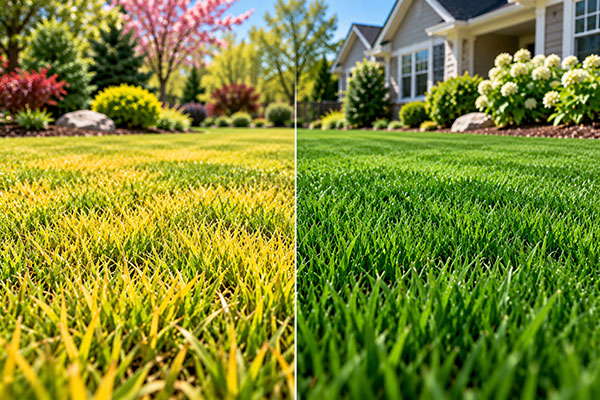 Many homeowners look at their discolored lawn and ask, can fertilization fix yellow grass? The answer is often yes, but it’s not always that simple. Furthermore, understanding the root cause of the yellowing is crucial for choosing the right treatment and restoring your lawn’s vibrant green color. This guide explores when fertilizer is the solution and what other issues might be at play. Consequently, you’ll be equipped with the knowledge to diagnose your lawn’s problems and take effective action.
Understanding Why Your Grass is Turning Yellow
Before reaching for a bag of fertilizer, it’s essential to play detective. Yellow grass, a condition known as chlorosis, can stem from several issues. Importantly, identifying the correct cause ensures you apply the right remedy and don’t waste time or money on ineffective treatments.
Nutrient Deficiencies
The most common reason for yellowing that fertilizer can solve is a lack of essential nutrients. Specifically, Nitrogen is the most frequent culprit. It is a vital component of chlorophyll, which gives grass its green color. Additionally, a lack of iron can also lead to yellowing, even if nitrogen levels are adequate. A soil test is the most accurate way to confirm a nutrient deficiency.
Improper Watering
Both too much and too little water can stress your lawn and cause it to turn yellow. Overwatering can suffocate the roots, preventing them from absorbing nutrients, which mimics a nutrient deficiency. In contrast, underwatering causes the grass to dry out and lose its color as it goes dormant to conserve resources. Therefore, consistent and deep watering is key.
Lawn Diseases and Pests
Fungal diseases like dollar spot or rust can create yellow patches on your lawn. Similarly, pests can cause significant damage. For example, grubs feed on grassroots, cutting off the plant’s ability to uptake water and nutrients, leading to large, irregular yellow or brown areas. If you suspect pests, you may need to investigate a comprehensive grub control strategy.
Soil Compaction
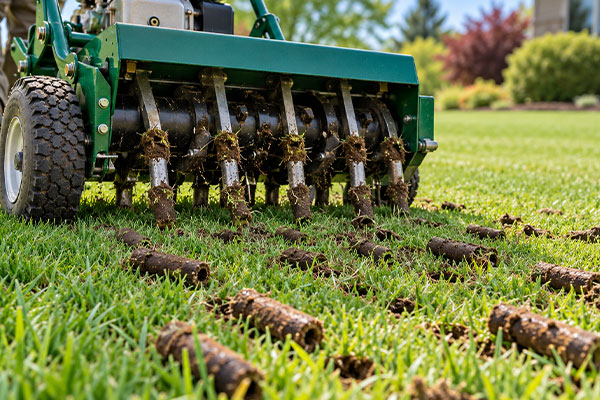
Over time, soil can become hard and compacted, especially in high-traffic areas. This compaction restricts the flow of air, water, and nutrients to the grassroots. Even with proper fertilization, compacted soil can prevent those nutrients from reaching their destination. In such cases, lawn aeration is often required to loosen the soil.
When Can Fertilization Fix Yellow Grass Effectively?
Fertilization is the direct solution when your lawn’s yellowing is confirmed to be from a nutrient deficiency. If your grass is showing uniform yellowing, especially in older leaves first, a nitrogen deficiency is likely. As a result, a nitrogen-rich fertilizer will produce visible greening within a week or two. If new grass blades are yellow while older ones remain green, an iron deficiency might be the problem. A soil test from a local university extension, like the one offered by UW-Madison’s Horticulture Division, provides definitive answers. Ultimately, if lack of food is the problem, the answer to can fertilization fix yellow grass? is a resounding yes.
What is the Best Fertilizer for Yellow Grass?
Choosing the right product is just as important as the decision to fertilize. The numbers on a fertilizer bag (N-P-K) represent the percentage of Nitrogen, Phosphorus, and Potassium. For greening up a yellow lawn, a high first number (Nitrogen) is what you need. However, a balanced approach is best for long-term health.
Consider these factors when selecting a fertilizer:
- Nitrogen-Rich Formulas: Look for fertilizers with a high N value to directly combat chlorosis and promote lush, green growth.
- Slow-Release vs. Fast-Release: Fast-release provides a quick green-up but can burn the lawn if over-applied. Slow-release fertilizers feed the lawn over several weeks, promoting more sustainable health.
- Iron Supplements: If an iron deficiency is suspected, use a fertilizer that includes iron. This provides a deep, rich green color that nitrogen alone can’t achieve.
- Organic Options: Compost and other organic materials improve soil structure while providing a slow, steady supply of essential nutrients.
A well-structured feeding schedule is one of the primary benefits of a professional lawn fertilization program, as it ensures your lawn gets what it needs, when it needs it.
Steps for Responsible Application
Applying fertilizer correctly is critical to success and environmental safety. Over-fertilization can damage your lawn and lead to nutrient runoff into local waterways. The EPA provides guidelines for responsible yard care that all homeowners should follow.
First, always read and follow the instructions on the product label for the correct application rate. Second, use a broadcast or drop spreader to ensure even coverage across the entire lawn. Uneven application can result in green stripes or patches. Finally, lightly water the lawn after applying granular fertilizer to help it absorb into the soil and activate the nutrients. This simple step also washes the granules off the grass blades, preventing potential leaf burn.
Final Thoughts: Key Takeaways for a Greener Lawn
Returning to our central question, the answer is clear. While it’s a powerful tool, fertilizer isn’t a magic wand. Its success depends on an accurate diagnosis of the problem. If a nutrient deficiency is the cause, the right fertilizer will work wonders. However, if the issue is soil compaction, disease, or improper watering, you must address those root causes first for any lasting improvement.
So, the next time you ask, can fertilization fix yellow grass?, you’ll know to first investigate the ‘why’ before applying the ‘what’. By combining proper diagnosis with a holistic approach to lawn care—including smart watering, aeration, and pest control—you can achieve the healthy, vibrant green lawn you desire. For a professional, worry-free solution, consider a tailored fertilization program to keep your lawn thriving all season long. Contact us for a quote today!
Related Posts