Wondering when should mosquito treatments begin in spring? Timing is key for a pest-free yard. Learn the ideal temperature and conditions to start. Conta...
What Is Lawn Aeration And Overseeding?
 For homeowners seeking a lush, vibrant lawn, understanding what is lawn aeration and overseeding is the first step toward achieving that goal. This powerful combination service directly addresses two of the most common lawn problems: compacted soil and thin, patchy turf. As a result, it creates the ideal conditions for robust, healthy grass growth that can withstand weeds, drought, and disease. This guide will break down the entire process, explaining why it’s the cornerstone of effective lawn care.
Why Is Soil Health the Foundation of a Great Lawn?
Before diving into the specifics of aeration, it’s crucial to understand the problem it solves: soil compaction. Over time, foot traffic, mowing, and even heavy rain can press soil particles together, reducing the pore space between them. Consequently, this dense soil makes it difficult for grass roots to get the air, water, and nutrients they desperately need to thrive.
Compacted soil leads to several issues, including poor drainage, shallow root growth, and an environment where weeds and diseases can easily take hold. Therefore, simply watering and fertilizing a compacted lawn is often ineffective, as the resources can’t penetrate the surface. Aeration is the mechanical solution to this widespread problem.
Breaking Down the Process: What is Lawn Aeration?
Lawn aeration is the process of creating small holes in the soil to alleviate compaction. This allows essential elements to reach the root zone. There are two primary methods, but one is vastly superior for long-term lawn health.
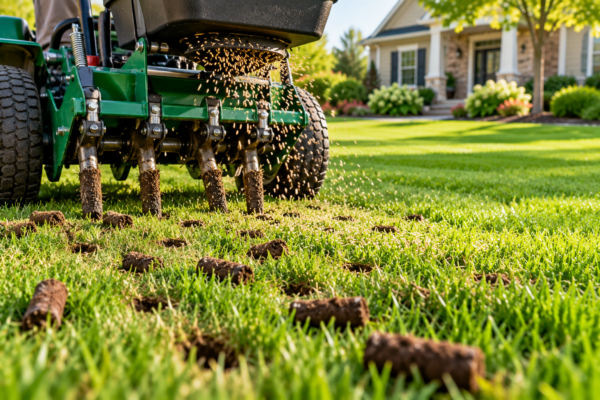
Spike aerators simply poke holes in the ground, which can sometimes increase compaction around the hole. In contrast, core aeration, the method used by professionals, involves pulling small plugs or ‘cores’ of soil and thatch out of the lawn. These plugs are left on the surface to decompose, returning valuable nutrients to the soil. Importantly, this method physically removes soil, creating lasting channels for air and water.
Key Benefits of Core Aeration
The advantages of core aeration are significant and directly contribute to a healthier turf. Specifically, the process provides numerous benefits:
- Improved Air Exchange: Roots need oxygen to grow and absorb nutrients. Aeration facilitates this critical gas exchange between the soil and the atmosphere.
- Enhanced Water Absorption: Water can penetrate deeper into the soil profile, reducing runoff and ensuring roots get the hydration they need, especially during dry periods.
- Better Fertilizer Uptake: Nutrients from fertilizers can reach the root system more effectively instead of sitting on the surface.
- Stronger Root Growth: With more space to grow, roots can delve deeper into the soil, creating a more resilient and drought-tolerant lawn.
- Reduced Thatch Buildup: Aeration helps break down the thatch layer—a dense mat of dead grass stems and roots—by introducing soil microorganisms that accelerate decomposition.
The Perfect Partner: An Introduction to Overseeding
Overseeding is the simple practice of spreading new grass seed over an existing lawn. This is done to fill in bare or thin patches, improve the overall density of the turf, and introduce new, more resilient grass varieties. However, just throwing seed on hard, compacted ground is a recipe for failure. For this reason, the seed needs good soil contact to germinate successfully, which is why timing it with aeration is so effective.
Why Is Understanding What is Lawn Aeration and Overseeding Crucial?
The true magic happens when these two services are performed together. Answering the question of what is lawn aeration and overseeding and why they are a package deal reveals the secret to a truly elite lawn. After a lawn has been core aerated, the entire surface is covered in thousands of small holes. These holes provide the perfect protected environment for new grass seed.
The seed falls into the aeration holes, where it is shielded from the sun and wind and has direct contact with moist soil. This dramatically increases the germination rate compared to simply spreading seed on the surface. As the new grass grows, it thickens the lawn, naturally crowding out weeds and creating that desirable, carpet-like appearance. This synergy is why professional lawn aeration and overseeding services are so highly recommended.
When is the Best Time for This Service?
Timing is critical for maximizing the results of aeration and overseeding. For cool-season grasses, which are common in many regions, the ideal window is late summer to early fall. During this period, the soil is still warm enough to encourage germination, while the cooler air temperatures reduce stress on the new grass. Furthermore, annual weeds are less active in the fall, giving the new turf a better chance to establish itself before winter.
Spring is a secondary option, but it can be less effective. Aggressive summer weeds can outcompete the new grass, and the approaching summer heat can put significant stress on the young seedlings. For a more detailed plan, you can always check our frequently asked questions or contact a professional.
How to Prepare Your Lawn for the Process
A little preparation can go a long way in ensuring the best possible outcome. Before your service, follow these simple steps:
- Mow the Lawn: Cut your grass one or two notches lower than usual. This allows the seed to reach the soil more easily.
- Water the Lawn: A day or two before the service, water your lawn thoroughly. Moist soil makes it much easier for the aerator to pull deep, clean plugs.
- Mark Obstructions: Clearly mark any sprinkler heads, valve boxes, or shallow utility lines to prevent damage from the equipment.
Final Thoughts: Your Next Steps to a Better Lawn
Ultimately, investing in professional care is the most effective way to leverage what is lawn aeration and overseeding. It ensures the job is done correctly with the right equipment and high-quality seed, setting your lawn up for long-term success. Furthermore, a professional can identify other issues, like those requiring a comprehensive fertilization program or grub control. For more information on lawn health, authoritative sources like the University of Maryland Extension provide excellent guidance.
By addressing soil compaction and turf density simultaneously, this combined service provides a comprehensive solution for a tired, struggling lawn. If you’re ready to transform your yard into a thick, green oasis, the path forward is clear. Ready to see the difference? We encourage you to request a free lawn care quote from our team today!
Related Posts