Signing up for lawn care should feel simple. You want a healthy yard, a clear…
How Does Grub Control Work?
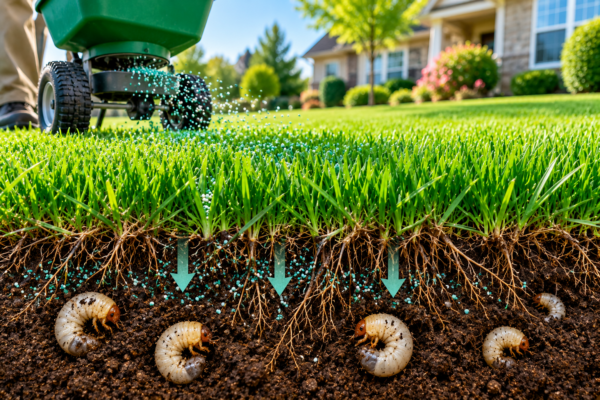 A lush, green lawn is a source of pride, but hidden beneath the surface, a destructive pest could be undoing all your hard work. Lawn grubs, the larvae of various beetles, feast on grassroots, causing widespread damage that can be difficult to repair. Consequently, understanding how does grub control work? is essential for any homeowner wanting to protect their turf. It involves a strategic approach that targets these pests at the most vulnerable stages of their lifecycle, using either preventive or curative methods to keep your lawn healthy and resilient.
Understanding the Enemy: The Grub Lifecycle
Before diving into control methods, it’s crucial to understand the lifecycle of the pests you’re fighting. Grubs are the C-shaped, white-bodied larvae of beetles such as Japanese beetles or June bugs. Their lifecycle is the key to effective treatment timing. For example, most adult beetles lay their eggs in the soil during mid-summer. These eggs hatch a few weeks later, and the young grubs immediately begin to feed on the tender roots of your grass throughout late summer and early fall.
As temperatures drop, the grubs burrow deeper into the soil to survive the winter. Then, as the ground thaws in spring, they move back toward the surface and resume feeding, causing even more damage. Finally, in late spring or early summer, they pupate and emerge as adult beetles, starting the cycle all over again. Therefore, targeting them when they are young and actively feeding is the most effective strategy.
What Are the Signs of Grub Damage?
Identifying a grub problem early can save your lawn from extensive harm. One of the first indicators is the appearance of irregular, brown patches of dead grass that don’t green up with watering. Moreover, the turf in these areas may feel spongy when you walk on it. Because the grubs have eaten the roots, you can often roll back the affected sod like a carpet, revealing the pests underneath.
Another significant clue is an increase in animal activity. Raccoons, skunks, moles, and birds love to feast on grubs. If you notice these animals frequently digging up your lawn, it’s a strong sign you have an underlying infestation. For a more detailed checklist, you can learn more about the specific signs of a grub problem to confirm your suspicions.
The Core of the Matter: How Does Grub Control Work?
Grub control operates on two primary strategies: preventive and curative. The best approach depends on the time of year and whether you have an active infestation. Importantly, each method uses different products and application schedules to achieve its goal.
Preventive Grub Control: Stopping Grubs Before They Start
As the name suggests, preventive treatments are applied before or shortly after grubs hatch. This is by far the most effective and recommended approach. Typically applied in late spring or early summer, these products create a protective zone in the soil. When the newly hatched grubs begin to feed, they ingest the insecticide and are eliminated before they can cause any significant damage. Products containing active ingredients like chlorantraniliprole are designed for this purpose, offering long-lasting protection throughout the peak grub season. According to the University of Wisconsin-Madison Extension, timing this application correctly is critical for success.
Curative Grub Control: Treating an Active Infestation
If you’ve missed the window for prevention and discover an active infestation, you’ll need a curative treatment. These products are designed to be fast-acting and are applied when grubs are present and actively feeding, usually in late summer, early fall, or spring. Curative treatments, often containing active ingredients like trichlorfon, work on contact to eliminate the existing grub population. However, it’s important to recognize that these treatments won’t reverse the damage that has already been done. They are a rescue mission to stop further destruction and understand how grubs damage lawns is the first step to recovery.
Application and Timing: The Keys to Success
Regardless of the method you choose, proper application is paramount for success. The effectiveness of any grub control product hinges on it reaching the root zone where grubs live and feed. After applying a granular or liquid product, it is almost always necessary to water your lawn thoroughly. This irrigation carries the active ingredient down through the thatch layer and into the soil.
Here are the key steps for effective grub control:
- Identify the Problem: Confirm you have a grub infestation and not another lawn disease or pest.
- Choose the Right Product: Select a preventive product for proactive care or a curative one for an existing problem.
- Apply at the Correct Time: Follow a calendar based on the grub lifecycle in your region—early summer for preventive, early fall or spring for curative.
- Follow Instructions: Always read and follow the product label for application rates and safety precautions, adhering to principles of Integrated Pest Management (IPM).
- Water In Thoroughly: Irrigate with at least a half-inch of water to move the product into the soil.
Professional vs. DIY Grub Control
While DIY options are available, managing grub control can be complex. Choosing the wrong product or applying it at the wrong time can lead to wasted money and a still-damaged lawn. In contrast, professional lawn care services have the expertise to correctly identify the problem, select the most effective products, and apply them at the perfect time for maximum impact.
Furthermore, professionals use commercial-grade products and calibrated equipment to ensure even and safe application. They understand that the question of how does grub control work? goes beyond just spreading granules; it’s a science of timing, biology, and precise application. Opting for professional grub control services provides peace of mind and guarantees the job is done right.
Key Takeaways for a Grub-Free Lawn
Ultimately, protecting your lawn from grubs is an achievable goal with the right knowledge and strategy. The most important takeaway is that prevention is far more effective and less damaging to your lawn than waiting to cure an infestation. By understanding the grub lifecycle and acting proactively in the early summer, you can stop a grub problem before it even begins.
Remember to monitor your lawn for early signs of trouble and always water in treatments to ensure they reach the target zone. If you feel uncertain about the process or want guaranteed results, partnering with a lawn care expert is your best bet. Ready to protect your lawn? You can request a free lawn care quote today to get started.
Related Posts