Signing up for lawn care should feel simple. You want a healthy yard, a clear…
When Is The Best Time To Aerate And Overseed Cool-Season Grass?
 For homeowners seeking a lush, vibrant lawn, understanding the calendar is as crucial as the techniques themselves. The question of when is the best time to aerate and overseed cool-season grass? is one of the most important you can ask. Timing this powerful duo of lawn care tasks correctly ensures your efforts result in a thick, healthy turf rather than wasted time and seed. Consequently, getting it right sets the stage for a successful growing season next year.
Understanding Cool-Season Grasses and Their Growth Cycle
Before pinpointing the perfect time on the calendar, it’s essential to understand the turf you’re working with. Cool-season grasses, such as Kentucky bluegrass, fescues, and perennial ryegrass, thrive in regions with cold winters and hot summers. Furthermore, their growth pattern is distinct and directly influences lawn care schedules.
These grasses have two primary growth spurts during the year: one in the spring and a more significant one in the early fall. Conversely, during the peak heat of summer, they often go into a state of dormancy to conserve water and energy, resulting in slower growth and reduced resilience. Therefore, aligning intensive care practices like aeration and overseeding with their natural growth cycle is paramount for success.
The Ideal Window: Why Late Summer to Early Fall is Best
So, let’s directly address the main topic. The undisputed champion season for this task is late summer into early fall, typically from late August through September, and sometimes into early October depending on your specific climate. This period provides a perfect combination of environmental factors that create an ideal nursery for new grass seed.
What makes this timing so effective?
Several key factors converge during this window to maximize germination and establishment. For example, the soil is still warm from the summer sun, which is a critical component for encouraging seeds to sprout quickly. Simultaneously, the cooling air temperatures reduce the stress on both existing grass and new seedlings. This balance is difficult to achieve at other times of the year.
- Warm Soil: Warm soil temperatures are essential for rapid seed germination. Seeds planted in late summer will sprout much faster than those planted in the cool soil of early spring.
- Cooler Air: The milder daytime temperatures and cooler nights are less stressful for new grass shoots, allowing them to establish strong roots without battling extreme heat.
- Reduced Weed Competition: Annual weeds, like crabgrass, are finishing their life cycle in the fall. This means new grass seedlings face significantly less competition for sunlight, water, and nutrients compared to the spring.
- Sufficient Establishment Time: Seeding in early fall gives the new grass several weeks to mature before the first hard frost and winter dormancy. This head start is crucial for surviving the winter and thriving the following spring.
Ultimately, knowing when is the best time to aerate and overseed cool-season grass comes down to leveraging this natural growth window. By working with your lawn’s lifecycle, you dramatically increase the odds of achieving a thicker, more resilient turf. This strategic timing is a core principle of effective lawn maintenance and one of the key ways aeration improves root growth.
Why Avoid Aerating and Overseeding in Spring or Summer?
While it might seem intuitive to tackle lawn projects in the spring, it’s actually a problematic time for this specific combination of tasks. Similarly, summer presents its own set of significant challenges that often lead to poor results.
The Problem with Spring Seeding
The primary issue with spring aeration and overseeding is weed pressure. Spring is when aggressive annual weeds like crabgrass germinate. When you aerate, you bring weed seeds to the surface and create a perfect environment for them to sprout. Moreover, most pre-emergent herbicides used to prevent crabgrass will also prevent new grass seed from growing, forcing you to choose between weed control and overseeding. This conflict makes spring a less-than-ideal choice.
The Dangers of Summer Stress
Summer is simply too harsh for new grass. The intense heat and potential for drought create a hostile environment where delicate seedlings struggle to survive. The existing lawn is also under significant stress, and the physical process of aeration can cause additional damage. As a result, seeding in the summer often leads to widespread failure and wasted resources. Understanding these pitfalls reinforces why the fall season is superior. For more information on lawn health, you can consult resources from university extensions like Penn State Extension.
Key Steps for a Successful Fall Project
Once you’ve scheduled your project for the right time, following the correct procedure is the next step to success. Proper execution ensures you get the maximum benefit from your efforts.
- Mow Low: Before you begin, mow your lawn one or two settings lower than usual, and bag the clippings. This allows the seed to make better contact with the soil.
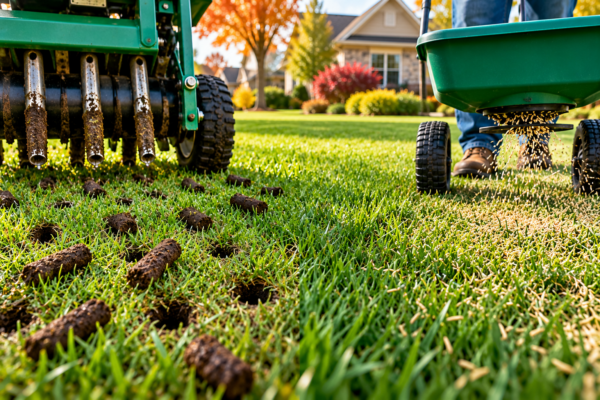
- Aerate Thoroughly: Use a core or plug aerator, which pulls small plugs of soil from the ground. This is far more effective than simply spiking the lawn, as it truly relieves soil compaction. These new channels allow air, water, and nutrients to reach the root zone. You can learn more about the process in this complete guide to lawn aeration.
- Apply Quality Seed: Spread a high-quality grass seed appropriate for your region and light conditions. Ensure even coverage by using a broadcast or drop spreader.
- Fertilize: Apply a starter fertilizer that is high in phosphorus. This nutrient is vital for stimulating strong root development in new seedlings.
- Water Correctly: This is perhaps the most critical step. The seedbed must remain consistently moist. This usually means light, frequent watering sessions multiple times a day for the first couple of weeks until the grass is established.
Following these steps in the correct season is the formula to make your lawn thicker and healthier. The combination of proper timing and technique is what delivers professional-grade results. Many homeowners wonder when is the best time to aerate and overseed cool-season grass, and seeing the successful outcome of a fall project makes the answer clear.
Final Thoughts: Timing is Everything for a Healthy Lawn
In conclusion, the success of your aeration and overseeding project hinges almost entirely on timing. By targeting the late summer to early fall window, you align your efforts with the natural growth cycle of cool-season grasses. This strategic approach provides warm soil for germination, cooler air for establishment, and reduced competition from weeds.
While spring might feel like the right time for lawn work, it presents significant challenges that make success difficult. By waiting for the optimal fall window, you set your lawn up for a strong finish to the current year and a vigorous start the next. Therefore, patience and proper scheduling are your best tools for building a dense, beautiful, and resilient lawn.
Related Posts