Wondering when should mosquito treatments begin in spring? Timing is key for a pest-free yard. Learn the ideal temperature and conditions to start. Conta...
Does Aeration Improve Root Growth?
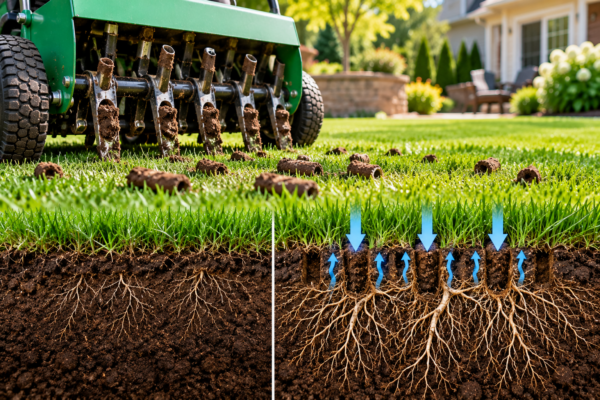 The short answer to the question, ‘Does aeration improve root growth?‘ is a resounding yes. However, understanding the ‘why’ and ‘how’ is crucial for any homeowner seeking a truly healthy, resilient lawn. Aeration directly combats the primary enemy of deep root systems: soil compaction. Consequently, by creating pathways for essential resources, this vital lawn care practice sets the stage for robust growth from the ground up, leading to a visibly thicker and greener turf.
What Is Soil Compaction and Why Is It a Problem?
Soil compaction happens when soil particles are pressed together, reducing the pore space between them. This is a common issue for lawns, often caused by heavy foot traffic, mowing, children playing, or even significant rainfall. When soil becomes compacted, it creates a dense barrier that is difficult for grassroots to penetrate. Furthermore, this lack of space severely limits the flow of oxygen, water, and nutrients to the root zone. Essentially, your grassroots can’t breathe, drink, or eat effectively. As a result, you may notice thinning grass, poor color, and areas where water puddles on the surface instead of soaking in.
How Aeration Directly Promotes Deeper Roots
Core aeration, the most effective method, involves using a machine to pull small plugs or ‘cores’ of soil from the lawn. This process directly counteracts the negative effects of compaction and creates an ideal environment for root development. Specifically, the benefits are threefold.
Enhanced Oxygen Flow to the Root Zone
Plant roots, like all living things, require oxygen for cellular respiration—the process of converting nutrients into energy. Compacted soil suffocates roots by eliminating the air pockets they depend on. Aeration, therefore, reintroduces these vital channels, allowing oxygen to penetrate deep into the soil. This immediate access to air invigorates the roots, stimulating new growth and improving the overall health of the plant.
Improved Water and Nutrient Absorption
The channels created by aeration also act as direct conduits for water and nutrients. Instead of running off the surface of hard, compacted ground, water can now soak deep into the soil where roots can access it. Similarly, when you apply fertilizer, aeration ensures these essential nutrients reach the root system rather than sitting on the surface. This leads to more efficient use of water and fertilizer, saving you money and making your lawn more environmentally friendly. For a deeper look at fertilization, it’s helpful to understand the benefits of a consistent lawn fertilization program.
Reduced Soil Density for Easier Growth
Perhaps most directly, aeration gives roots the physical space they need to grow. By removing plugs of soil, the process relieves the pressure and density of the ground. Roots can then expand more easily, pushing deeper into the soil profile to establish a strong, extensive network. This is a fundamental aspect of the answer to ‘Does aeration improve root growth?‘ because it physically enables the expansion that was previously blocked.
So, Does Aeration Improve Root Growth in All Soil Types?
While the answer is universally positive, the impact of aeration is most dramatic in lawns with heavy clay soil. Clay soils are composed of very fine particles that are notorious for becoming tightly compacted. In these conditions, aeration is not just beneficial; it is essential for maintaining a healthy lawn. However, even sandy soils can benefit. While less prone to compaction, sandy soils can develop a thick layer of thatch that prevents water and nutrients from reaching the soil. Aeration helps to break up this thatch layer, improving overall turf health. If you’re unsure about your lawn’s condition, learning the signs your lawn needs aeration can be very helpful.
The Key Benefits of an Improved Root System
A deep and robust root system is the foundation of a beautiful lawn. The benefits extend far beyond what you can see on the surface. The science is well-documented by turfgrass experts, who emphasize the importance of soil porosity for root health (for a technical deep-dive, see this Purdue University Extension publication). Importantly, a strong root network leads to:
- Increased Drought Tolerance: Deeper roots can access moisture from lower in the soil profile, making your lawn more resilient during dry spells and reducing the need for constant watering.
- Better Nutrient Uptake: A larger root system is more efficient at absorbing fertilizers and natural nutrients, meaning less waste and a healthier plant.
- Enhanced Durability: Strong roots create a dense turf that can better withstand foot traffic, pests, and disease, leading to faster recovery from stress.
- Thicker, Greener Turf: Ultimately, a healthy root system is the foundation for the lush, green lawn everyone desires. When roots are healthy, the visible grass blades will be too.
For an even greater impact on turf thickness, many homeowners find success by combining aeration with overseeding. This process introduces new grass seed into the freshly prepared soil, filling in bare spots and creating a denser lawn.
Key Takeaways: The Foundation of a Healthy Lawn
To circle back to our original question: Does aeration improve root growth? The evidence is clear and conclusive. By alleviating soil compaction, aeration allows critical resources—oxygen, water, and nutrients—to reach the root zone. This process not only encourages roots to grow deeper and stronger but also enhances the overall health, resilience, and beauty of your lawn. It is one of the single most effective treatments for creating a sustainable, low-maintenance turf. If you’re looking for a long-term solution for a struggling lawn, the answer lies beneath the surface. Give your roots the room they need to thrive.
Ready to unlock your lawn’s full potential? Professional aeration can make all the difference. Contact us today for a professional lawn care quote and let us help you build a healthier lawn from the ground up.
Related Posts