Wondering when should mosquito treatments begin in spring? Timing is key for a pest-free yard. Learn the ideal temperature and conditions to start. Conta...
How Can I Keep My Lawn Thick Year-Round?
 Every homeowner desires a lush, green carpet of grass that looks great in any season. Consequently, many find themselves asking, How can I keep my lawn thick year-round? The answer isn’t a single secret trick but a consistent, year-long strategy built on several key pillars of lawn care. Furthermore, by understanding the roles of proper mowing, strategic fertilization, effective watering, and seasonal aeration, you can build a resilient and dense turf that becomes the envy of the neighborhood. This guide provides the actionable steps you need to take.
What Role Does Mowing Play in Lawn Thickness?
Your mowing habits have a direct impact on the density and health of your grass. In fact, cutting your lawn too short is one of the most common mistakes that leads to thinning. Scalping the grass stresses the plant, reduces its ability to photosynthesize, and invites weeds to take over bare patches. Therefore, adopting a better mowing strategy is your first line of defense.
For most grass types, you should aim to mow high, removing only the top one-third of the grass blade at each cutting. This encourages the grass to grow deeper roots, making it more drought-tolerant and resilient. Additionally, ensure your mower blades are always sharp. Dull blades tear grass instead of cutting it cleanly, leaving it susceptible to disease. Finally, consider leaving the clippings on the lawn. This practice, known as grasscycling, returns valuable nutrients to the soil as the clippings decompose.
The Foundation of a Thick Lawn: Fertilization and Soil Health
A thick lawn is a well-fed lawn. Grass requires a steady supply of nutrients to grow strong and dense. A comprehensive seasonal fertilization program is essential for providing what your soil lacks. Importantly, your lawn’s nutritional needs change with the seasons, so a one-size-fits-all approach is rarely effective.
A balanced fertilizer typically contains three primary macronutrients. Understanding them helps you appreciate what you’re feeding your lawn:
- Nitrogen (N): This is the most important nutrient for lush, green, and vigorous growth.
- Phosphorus (P): This promotes strong root development, which is critical for a thick, resilient turf.
- Potassium (K): This helps the grass regulate its internal processes and improves its overall hardiness against stress, disease, and cold.
As a result, applying the right blend at the right time—for example, a nitrogen-rich formula in the spring and a potassium-heavy one in the fall—makes a significant difference. For truly customized care, a professional soil test can reveal specific deficiencies that need to be addressed.
Answering the Big Question: How Can I Keep My Lawn Thick Year-Round?
So, let’s bring it all together. The definitive answer to How can I keep my lawn thick year-round? lies in combining the core practices into a cohesive annual plan. Mowing high and fertilizing correctly set the stage, but to achieve truly superior thickness, you must also address soil compaction and fill in thinning areas. This is where aeration and overseeding become invaluable.
The Power of Aeration and Overseeding
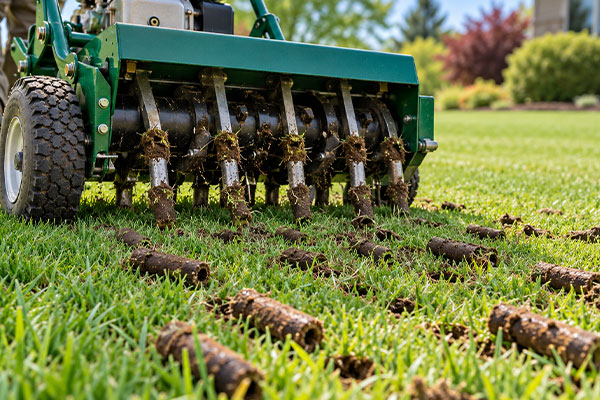
Over time, soil naturally becomes compacted from foot traffic, rain, and mowing. This compaction squeezes air and water channels, making it difficult for roots to breathe, absorb water, and access nutrients. Core aeration is the process of mechanically removing small plugs of soil from the lawn. Consequently, this process opens up the soil, allowing air, water, and fertilizer to penetrate deep into the root zone. For homeowners seeking a robust lawn, a professional lawn aeration and overseeding service is one of the best investments you can make. After aeration is the perfect time to overseed, which is the process of spreading new grass seed over your existing turf to fill in bare spots and increase overall density.
Smart Watering Practices for a Resilient Turf
How you water is just as important as how often you water. Many homeowners make the mistake of light, frequent watering, which encourages shallow root growth. A shallow root system makes your lawn vulnerable to drought and heat stress. Instead, the goal should be deep and infrequent watering.
Water your lawn long enough for the moisture to soak 6 to 8 inches into the soil. For most lawns, this translates to about one inch of water per week, delivered in one or two sessions. The best time to water is early in the morning, between 4 a.m. and 9 a.m. Watering during the day leads to excessive evaporation, while watering at night can leave the grass blades wet for too long, promoting fungal diseases. A simple test is to walk on your grass; if your footprints don’t spring back up, it’s time to water.
Don’t Forget Pest and Weed Control
All your hard work can be undone by invading weeds or destructive pests. Weeds compete with your grass for sunlight, water, and nutrients, quickly turning a thick lawn into a patchy mess. Similarly, sub-surface pests like grubs can cause immense damage by feeding on grass roots. You may notice large, irregular brown patches that lift up like a carpet. Therefore, proactive monitoring and treatment are crucial.
Implementing an integrated pest management strategy, as recommended by authoritative sources like the University of Minnesota Extension, can help you manage issues without overuse of chemicals. For persistent problems like grubs, a targeted application of effective grub control is essential. Ultimately, a healthy, dense lawn is the best defense against both weeds and pests, but knowing when to intervene is a key part of the answer to ‘How can I keep my lawn thick year-round?’.
Key Takeaways for a Thicker Lawn
Achieving a consistently thick lawn is a marathon, not a sprint. By following a dedicated plan, you can create a beautiful and resilient turf that thrives all year. Here are the most important steps to remember:
- Mow High and with Sharp Blades: Never cut more than one-third of the grass blade’s height at a time to encourage deep root growth.
- Fertilize Seasonally: Feed your lawn the right nutrients at the right time to support vigorous growth and overall health.
- Aerate Annually: Relieve soil compaction at least once a year to ensure water, air, and nutrients can reach the roots.
- Overseed Thinning Areas: Introduce new seed after aerating to fill in bare spots and increase turf density.
- Water Deeply and Infrequently: Encourage a deep, drought-resistant root system by watering thoroughly but not too often.
- Manage Pests and Weeds: Be proactive in identifying and treating issues like grubs and invasive weeds before they take over.
By integrating these practices, you’ll be well on your way to a thicker, healthier lawn. If you’d like professional help to guarantee results, don’t hesitate to get a professional lawn care quote from our team today!
Related Posts