Signing up for lawn care should feel simple. You want a healthy yard, a clear…
Why Is Lawn Fertilization Important?
 For homeowners who dream of a lush, green carpet of grass, the question of why is lawn fertilization important? is fundamental. While regular mowing and watering are essential, they are only part of the equation. Specifically, fertilization is the process of feeding your lawn, providing it with the critical nutrients it needs to thrive, fight off threats, and maintain its vibrant color. Consequently, understanding this process is the first step toward achieving a truly healthy and resilient yard. This guide will break down the science, benefits, and best practices of lawn fertilization, empowering you to make the best decisions for your turf.
The Science Behind a Healthy Lawn: Macronutrients Explained
Think of fertilizer as a balanced meal for your grass. Just like people, lawns require a specific diet of nutrients to perform at their best. Moreover, these nutrients are often depleted from the soil over time through rain, runoff, and grass growth itself. The three most critical nutrients, known as macronutrients, are Nitrogen (N), Phosphorus (P), and Potassium (K). You will see these represented as an N-P-K ratio on fertilizer bags (e.g., 10-10-10).
Nitrogen (N): The Growth Engine
Nitrogen is arguably the most crucial nutrient for a lawn. Its primary function is to promote vigorous, leafy growth and give grass its rich, green color. Specifically, nitrogen is a core component of chlorophyll, the pigment that plants use to convert sunlight into energy through photosynthesis. A nitrogen-deficient lawn will often look pale, yellow, and thin. Therefore, a steady supply of nitrogen is essential for the dense, beautiful turf that every homeowner desires.
Phosphorus (P): The Root Developer
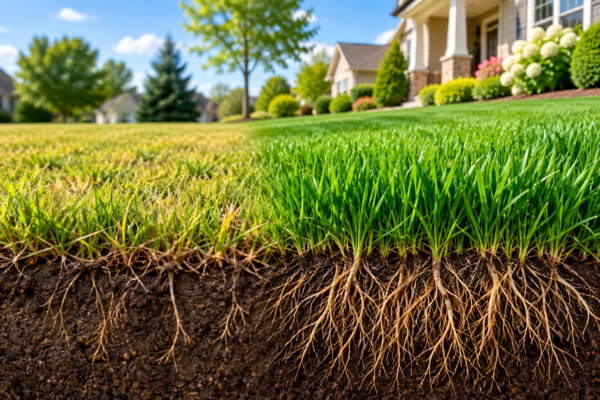
While nitrogen focuses on what you see above ground, phosphorus works its magic below the surface. This nutrient is vital for establishing strong, deep root systems. For example, during the early stages of growth, such as when seeding a new lawn or helping existing grass mature, phosphorus is critical. A robust root system allows the grass to more effectively absorb water and other nutrients from the soil. As a result, the lawn becomes more resilient to drought, heat, and foot traffic.
Potassium (K): The Protector
Potassium is the guardian of your lawn’s overall health. It helps regulate many of the plant’s internal processes, strengthening it from the inside out. Furthermore, potassium improves the lawn’s tolerance to environmental stressors like extreme temperatures, drought, and disease. It functions much like a multivitamin, ensuring the grass can withstand challenges and recover more quickly from damage. A lawn with adequate potassium is tougher and more durable throughout the year.
What Are the Core Benefits of Regular Fertilization?
Now that we understand the key nutrients, let’s explore the tangible benefits you’ll see from a consistent fertilization schedule. The answer to why is lawn fertilization important? becomes clear when you see the dramatic improvements in your yard’s health and appearance.
- Promotes Lush, Green Growth: This is the most visible benefit. By providing a balanced diet, fertilizer fuels the rapid growth of dense, green grass blades, creating that coveted carpet-like appearance.
- Enhances Weed and Pest Resistance: A thick, healthy lawn is the best defense against weeds. When grass grows densely, it naturally crowds out opportunistic weeds like dandelions and crabgrass, leaving them no room to germinate. Additionally, a well-fed lawn is stronger and less susceptible to damage from pests and diseases.
- Develops Stronger, Deeper Root Systems: As mentioned, phosphorus and potassium are key to root development. A deep root system is crucial for drought tolerance, as it can access moisture from deeper within the soil, reducing the need for constant watering.
- Improves Recovery from Stress: Lawns face numerous stressors, from heavy foot traffic and summer heat to insect damage. A properly fertilized lawn has the energy reserves to repair itself and bounce back much faster than a nutrient-starved one. For instance, you can learn more about correcting yellow patches in your grass, which is often a sign of nutrient deficiency.
- Increases Overall Property Value: A beautiful, well-maintained lawn significantly boosts a home’s curb appeal. This not only creates a more enjoyable outdoor space for your family but also adds tangible value to your property.
Understanding Why is Lawn Fertilization Important for Soil Health
A common misconception is that fertilizer only feeds the grass. In reality, it plays a crucial role in nourishing the entire soil ecosystem. Healthy soil is teeming with beneficial microorganisms that break down organic matter, and these microbes also need nutrients to thrive. By replenishing essential elements, you are supporting the foundation of your entire lawn. Importantly, fertilization can also help manage soil pH. According to experts at the University of Wisconsin Extension, soil pH affects the availability of nutrients to the grass roots. Some fertilizers are formulated to help bring the soil to a more neutral pH, unlocking existing nutrients that the grass couldn’t previously access. Therefore, a good fertilization strategy improves both the immediate nutrient supply and the long-term health of the soil itself.
Common Mistakes to Avoid When Fertilizing Your Lawn
To get the most out of your efforts, it’s crucial to avoid common pitfalls that can harm your lawn or the environment. Applying fertilizer correctly is just as important as choosing the right one.
- Over-fertilizing: More is not better. Applying too much fertilizer can burn the grass, damage the roots, and lead to nutrient runoff into local waterways. Always follow the application rates on the product label. Responsible fertilizer use is critical, as noted by the Environmental Protection Agency.
- Fertilizing at the Wrong Time: The timing of fertilization should align with the grass’s natural growth cycles. For cool-season grasses common in many areas, fall is the most important time to fertilize. Applying it during peak summer heat can stress the lawn.
- Using the Wrong Type: There are many different types of lawn fertilizer, from slow-release granules to quick-release liquids. Choosing the right one depends on your grass type, soil condition, and time of year.
- Uneven Application: Using a properly calibrated spreader is key to ensuring even coverage. An uneven application will result in a patchy lawn with stripes of dark green and yellow, which defeats the purpose of fertilizing. For best results, consider combining fertilization with aeration to ensure nutrients reach the soil effectively.
Final Thoughts: The Long-Term Value of a Fertilization Program
Ultimately, the answer to why is lawn fertilization important? lies in its long-term value. It is an investment in the health, beauty, and resilience of your property’s most significant living feature. A consistent feeding schedule transforms a struggling, patchy yard into a robust and beautiful landscape. It builds a stronger root system, enhances natural defenses against weeds and pests, and ensures your grass has the resources to endure environmental stress. While it requires knowledge and effort, the results are undeniable. For homeowners seeking a consistently beautiful lawn without the guesswork, a professional fertilization program can provide the expertise and tailored approach needed to achieve outstanding results year after year.
Related Posts